Overview
Working environment measurement is defined under Article 65 of the Industrial Safety and Health Act as "measurement conducted to assess the condition of the working environment." For legally designated workplaces, periodic measurements must be carried out by a certified Working Environment Measurement Expert employed either by the company or by a registered Working Environment Measurement Organization.
As a registered Working Environment Measurement Organization, we are authorized to conduct working environment measurements on behalf of businesses operating designated workplaces. We provide comprehensive support, from identifying target substances and selecting and prioritizing measurement items to conducting routine working environment measurements and specialized environmental assessments.
● You have been instructed by the Labor Standards Inspection Office or your parent company to conduct working environment measurements.
● You would like to outsource measurements because your company cannot perform them in-house.
● You only need laboratory analysis of collected samples.
● You would like to outsource measurements to reduce the burden on your staff.
We are happy to discuss the most suitable solution based on your specific requirements.
Applications
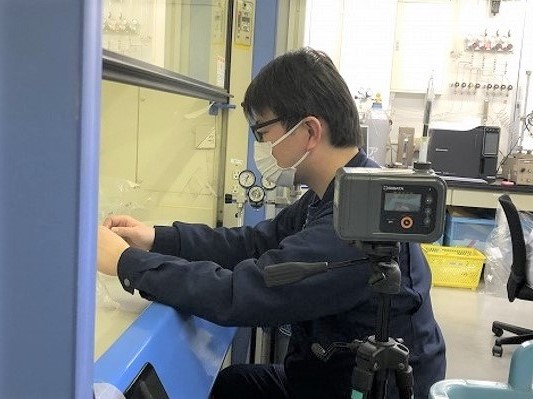
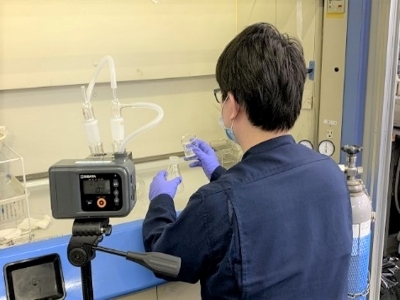
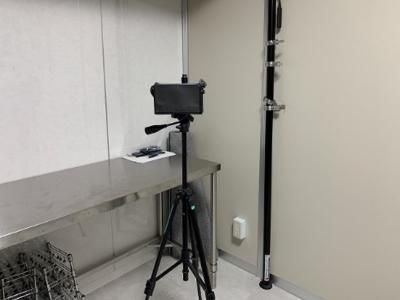
Periodic working environment measurements are legally required at designated workplaces where such measurements are mandated.
.png)
.png)
.png)
Examples of workplaces: From Ministry of Health, Labour and Welfare brochures,
"How to Conduct Risk Assessments for Printing and Bookbinding Operations" and "How to Conduct Risk Assessments for Painting Operations."
Measurements are required every six months (twice a year) for workplaces handling dust, asbestos, organic solvents, or specified chemical substances; annually for workplaces handling lead; and monthly for workplaces handling unsealed ionizing radioactive materials.
In addition, if measurement results fall into Control Class 3 (indicating that the working environment is unacceptable and immediate corrective action is required), the working environment must be improved, followed by additional measurements to verify the effectiveness of the corrective actions and re-evaluate the working environment.
Survey & Analysis Process (After Your Request)
Before conducting measurements, we determine a preliminary measurement plan by considering various factors, including the hazardous substances to be measured (measurement parameters), the target workplace, whether the work area falls within the scope of legally required measurements, the appropriate measurement area, how hazardous substances are used during operations, and the most suitable timing for obtaining an accurate evaluation of the working environment.
At the time of measurement, we reconfirm the site conditions, the way hazardous substances are handled, and the details of the work being performed. The measurement plan may be adjusted as necessary based on the actual conditions observed on site.
>
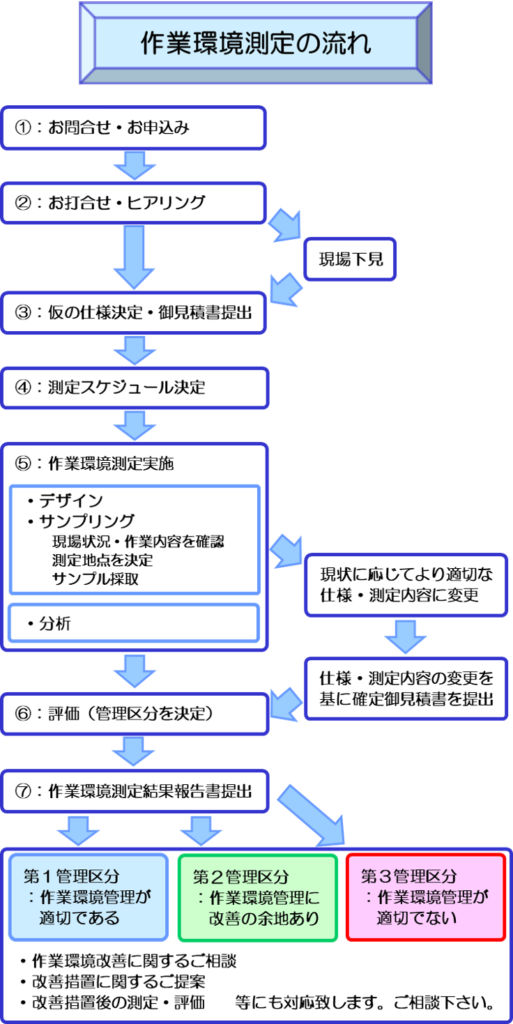
- Step 1
- Preliminary Survey & Development of the Measurement Plan
【Measurement Design (Before Measurement): In accordance with the Working Environment Measurement Standards】
● We prepare a preliminary measurement plan based on site conditions, the hazardous substances to be measured, and information about the target workplace.
● This includes determining the measurement area and sampling locations, selecting target hazardous substances, reviewing work procedures, and identifying the most appropriate timing for measurements.
● We may ask for your cooperation by interviewing on-site workers or safety managers regarding work procedures, or by requesting Safety Data Sheets (SDS) for the substances being handled.
● Support is provided through on-site visits to your facility, meetings at our office, site inspections, telephone consultations, or email correspondence.

- Step 2
- Working Environment Measurement
【Measurement Design (During Measurement): In accordance with the Working Environment Measurement Standards】
● We confirm actual site conditions and work activities to determine sampling locations and timing. If the preliminary plan is found to be unsuitable for accurately evaluating the working environment, the measurement plan will be revised accordingly.
【Sampling: In accordance with the Working Environment Measurement Standards】
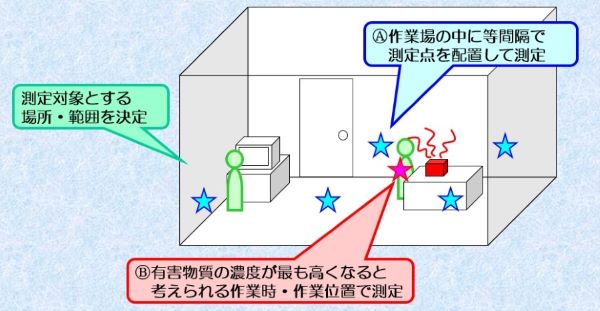
● Two types of measurements are conducted: A Measurement, which evaluates the average condition of the working environment, and B Measurement, which is performed at the time and location where workers are expected to be exposed to the highest concentration of hazardous substances. Hazardous substances are sampled at each designated measurement point.
● A Measurement: Measurement points are evenly distributed throughout the measurement area, and measurements are taken at every point.
● B Measurement: Measurements are taken at the work location and during the operation where the highest concentration of hazardous substances is expected (i.e., where the working environment is considered to be the most severe).
- Step 3
-
Determine the Control Class for A and B Measurements
【In accordance with the Working Environment Evaluation Standards】
● An evaluation value is calculated based on the measured concentrations at all A Measurement points.
● The Control Class for A Measurement is determined by comparing the evaluation value with the administrative control level specified for each measurement item.
● The Control Class for B Measurement is determined by comparing the measured concentration with the administrative control level.
>

- Step 4
- Determine the Workplace Control Class
【In accordance with the Working Environment Evaluation Standards】
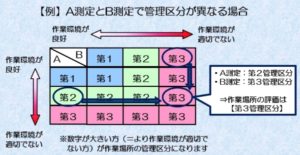
● The overall Workplace Control Class is determined based on the results of both A and B Measurements.>

● If the control classes for A and B Measurements differ, the higher numerical class (indicating the less favorable working environment) is adopted as the Workplace Control Class.
- Step 5
- Reporting the Measurement Results / Post-Measurement Support
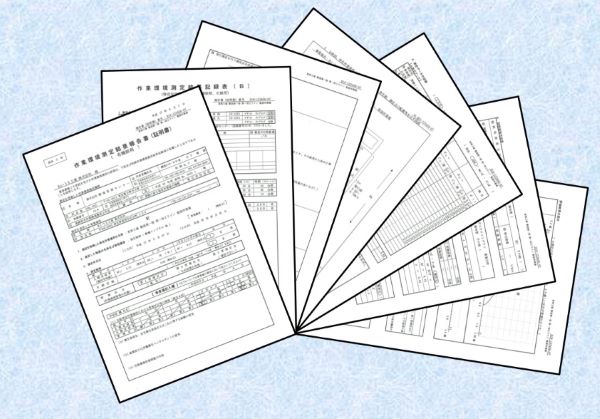
● We prepare a Working Environment Measurement Report in the prescribed standard format.
● If the workplace is classified as Control Class 3 (indicating an unacceptable working environment), corrective actions are required. We also provide consultation on improvement measures and conduct follow-up measurements after corrective actions have been implemented.
● For certain hazardous substances, if the working environment is classified as Control Class 3, employment of female workers in that workplace may be prohibited. Once the working environment has been improved and subsequent measurements result in Control Class 1 or 2, female workers may resume working in the area.
Features
We also provide measurements for substances not legally required to be monitored, as well as measurements under special conditions and non-standard measurement methods.
● We provide measurements for substances that are not legally subject to working environment measurement requirements, workplace condition assessments that do not fall under A or B Measurements, personal exposure monitoring, and other specialized measurement services. Please feel free to contact us for consultation.
● We also offer consultation on improving the working environment and can introduce local exhaust ventilation equipment manufacturers. Our team includes certified Occupational Health Consultants.
* Reports for measurements other than standard working environment measurements (such as measurements under special conditions, non-standard measurements, or personal exposure monitoring) will be provided in a format different from the standard reporting template.
We continuously stay up to date with the latest information while maintaining high technical standards and improving the reliability of our services.
● As a member of the Japan Association for Working Environment Measurement, we keep up with the latest information on laws, regulations, and knowledge regarding the hazards and risks of chemical substances.
● We participate in the National Proficiency Testing Program to maintain the technical standards required of Working Environment Measurement Organizations and to continually improve the reliability of our measurement services.
Case Studies & Experience


● Measurement of Metal Inhalation Exposure
We have conducted personal exposure monitoring to estimate the amount of metal inhaled by workers in environments where high concentrations of dust and fumes are generated.
● Identification of High-Concentration Areas and Collection of Concentration Data Using Portable Monitors
We have conducted surveys in which factories were divided into work areas and storage areas, portable monitors were used to estimate target substance concentrations, high-concentration areas were identified, and concentration data for each area were collected.
● Investigation of Contamination Pathways Using Supply Air Measurements
We have investigated whether indoor contamination originated from outdoor air by simultaneously measuring target substance concentrations indoors and at the air supply inlet of the ventilation system.
Notes
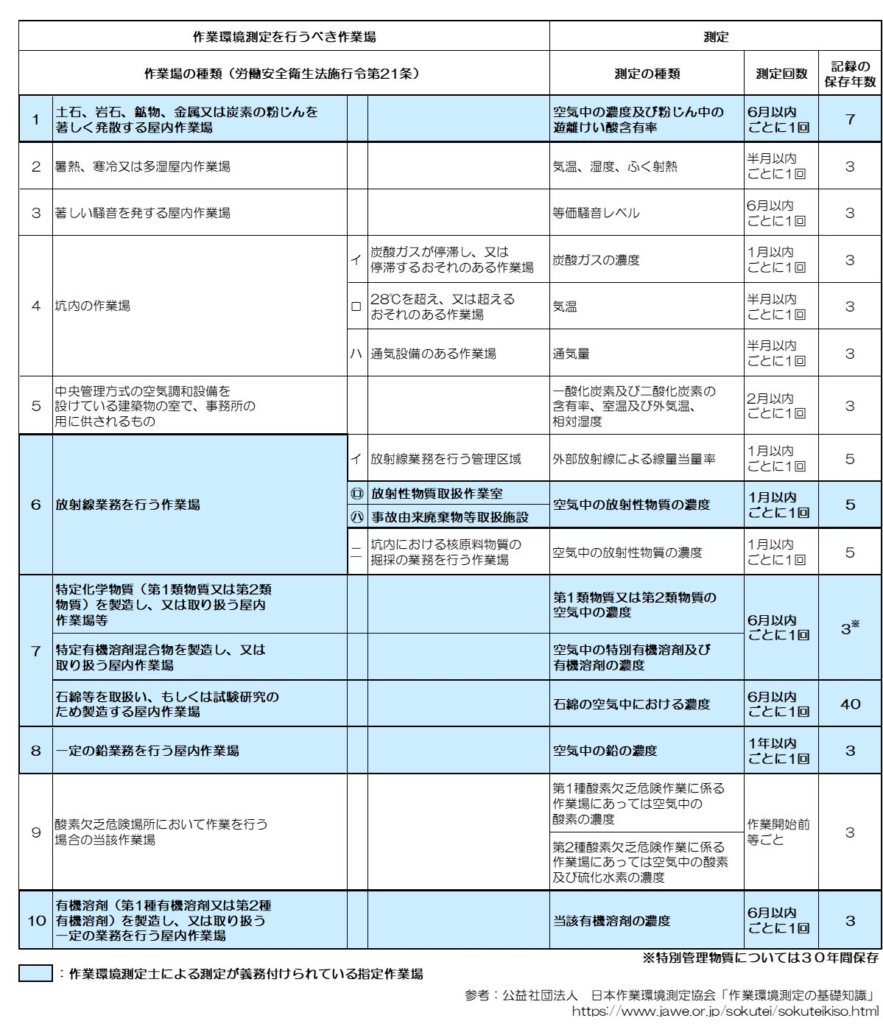
● The designated workplaces where measurements by a certified Working Environment Measurement Expert are legally required are the colored sections in the table below: 【1, 6-B, 6-C, 7, 8, and 10】. If you are unsure whether your workplace falls into one of these categories, please contact us.
● The latest information on substances subject to working environment measurement is available on the Ministry of Health, Labour and Welfare's Workplace Safety Website. We are also happy to assist if your available information or SDS is outdated, only contains common or abbreviated names, or if you are unsure whether a substance is subject to measurement requirements.
Reference: Ministry of Health, Labour and Welfare – Workplace Safety Website
Home > Occupational Safety & Health Keywords > Administrative Control Levels
https://anzeninfo.mhlw.go.jp/yougo/yougo12_1.html
Administrative Control Levels (Appendix to the Working Environment Evaluation Standards)>