
Overview
Businesses that discharge wastewater into public water bodies (such as seas, rivers, and lakes) are required to comply with effluent standards established under the Water Pollution Control Act, the Act on Special Measures Concerning Conservation of Lake Water Quality, and other applicable regulations. Wastewater discharged into sewer systems is also subject to discharge standards under the Sewerage Act.
These inspections must be conducted at specified intervals. Businesses that discharge wastewater exceeding the applicable standards may be subject to penalties under the relevant laws and regulations.
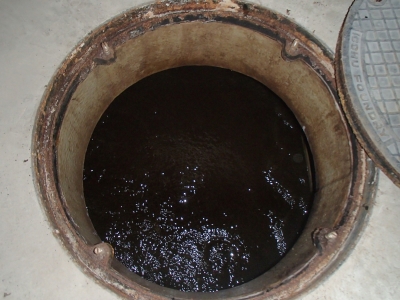
In addition to monitoring the final discharge outlet, conducting water quality testing at each treatment stage helps identify the appropriate timing for maintenance of each treatment facility and prevents problems before they occur.
Survey and Analysis Process (After Your Request)
- Step 1
- Proposal of Survey Plan
We confirm your requirements and review applicable laws and local regulations.

- Step 2
- Site Inspection and Finalization of the Measurement Plan
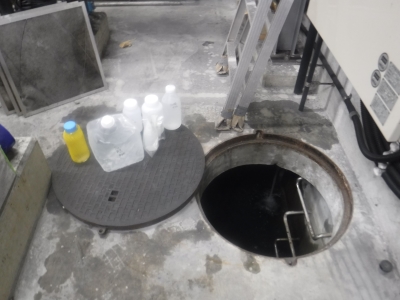
We conduct safety checks, identify potential issues, and confirm the measurement schedule.
- Step 3
- Measurement and Analysis
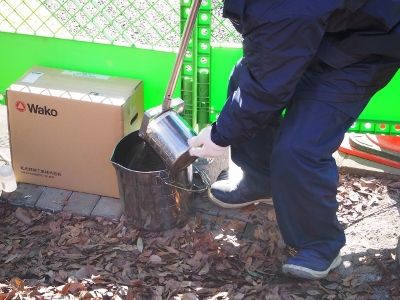
Our experienced technicians perform on-site measurements, while analyses are carried out using advanced technology and state-of-the-art equipment.

- Step 4
- Reporting and Explanation
We provide clear technical reports explaining the measurement results.
- Step 5
- Performance Assessment and Improvement Proposals
We analyze the causes of identified issues and propose effective improvement measures.
Features
As an independent organization with no affiliation to any equipment manufacturer, we provide objective assessments of wastewater treatment facilities and propose improvements to help establish optimal wastewater treatment systems, including reducing sludge generation and stabilizing effluent quality.
Important Notes
How can wastewater discharge standards be met?
● Reduce the use of regulated substances by improving manufacturing methods and production processes.
● Monitor the amount of regulated substances discharged from each process and take measures to reduce emissions.
● If compliance cannot be achieved through these measures alone, it may be necessary to install treatment facilities specifically designed to remove the regulated substances. You may also consider collecting waste liquid and outsourcing its treatment to a licensed waste disposal company.
