
Overview
In recent years, an increasing number of soil contamination cases have been identified at former factory sites and other locations due to hazardous substances used in past industrial activities. In addition, unexpected soil contamination is sometimes discovered even on land where no industrial activities have been conducted, because the fill material used during land development contained hazardous substances. Soil contamination countermeasures often require significant time and financial resources, making them not only a public health concern but also a major economic and social issue.
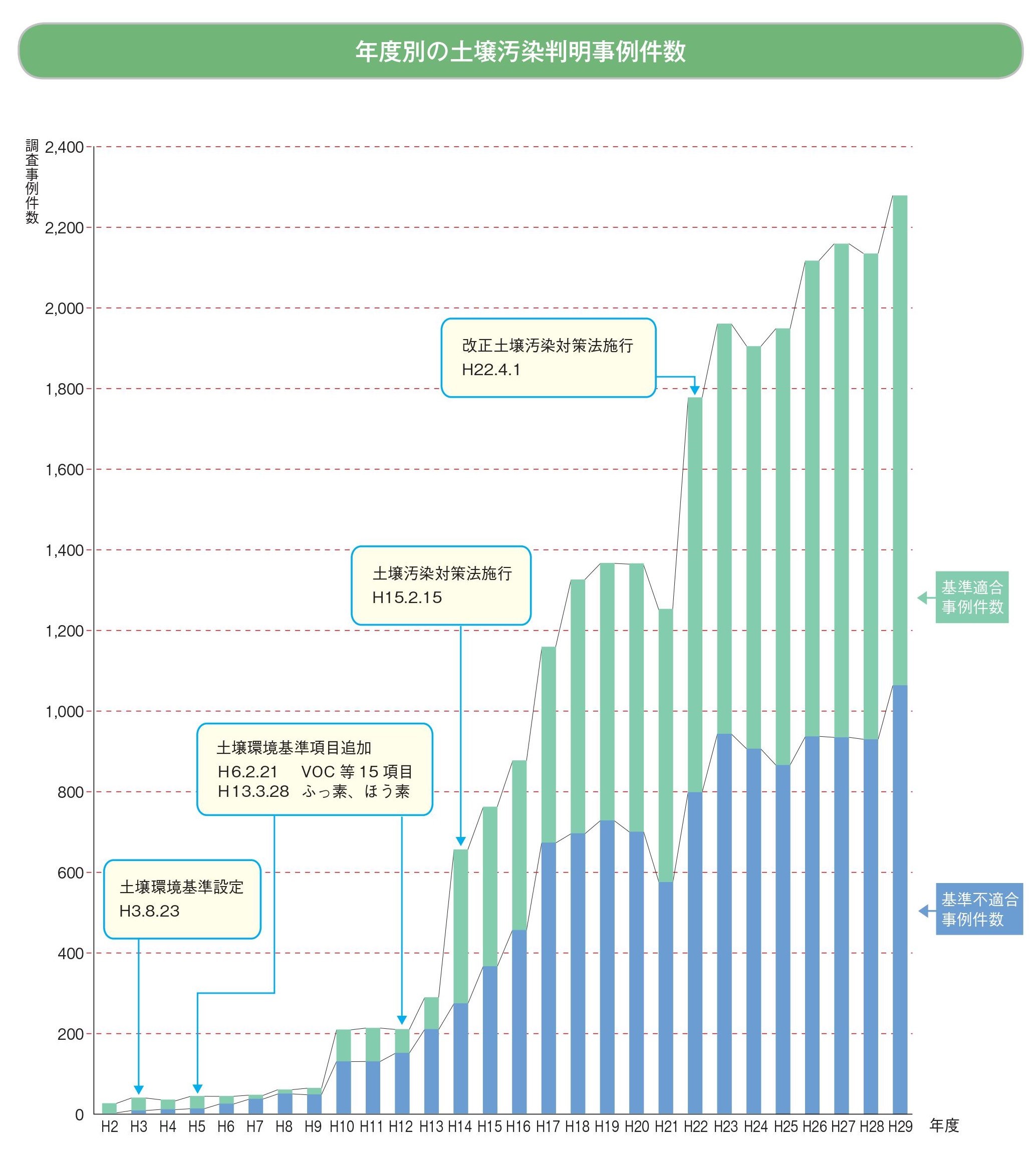
[ Read More ]
Applications
Under the Soil Contamination Countermeasures Act, a historical land use investigation (Phase I ESA) and, where necessary, a soil contamination investigation are required when the use of specified facilities handling hazardous substances is discontinued at business sites (Article 3), or when land development exceeding a certain scale is planned and the prefectural governor or other competent authority determines that there is a potential risk of soil contamination (Article 4). In addition, some prefectures and municipalities have established their own ordinances that require soil contamination investigations.
Voluntary soil contamination investigations are also conducted to assess property value prior to land transactions and to identify potential soil contamination risks before acquisition or development.
.png)
[ Read More ]
Survey and Analysis Process (After Your Request)
- Step 1
- Historical Land Use Investigation (Phase 1)
We evaluate the potential for soil and groundwater contamination through document reviews (including land registry records, topographic maps, residential maps, and aerial photographs), interviews, and on-site inspections.
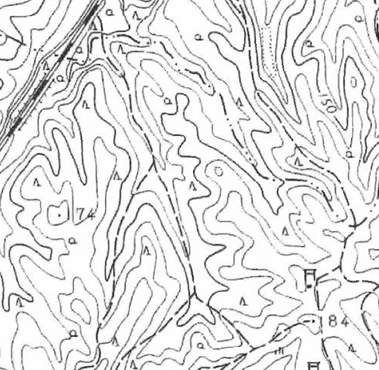 Topographic Map (Historical Edition)
- Step 2
- Preliminary Soil Investigation (Phase 2-1)
Based on the findings of the Historical Land Use Investigation (Phase 1), we prepare an investigation plan for areas with potential contamination and conduct surface soil investigations to determine the presence or absence of contamination.
 Soil Gas Sampling
- Step 3
- Detailed Soil Investigation (Phase 2-2)
For contaminants identified during Phase 2-1, depth investigations are conducted to determine the vertical extent of contamination.
Groundwater Investigation
If groundwater is encountered during borehole drilling, groundwater samples are collected and analyzed as necessary to evaluate groundwater contamination.
The results of the detailed investigation provide the basis for selecting appropriate remediation methods and estimating remediation costs.
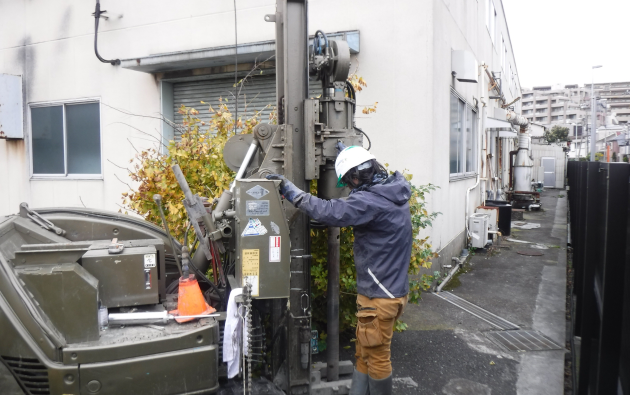 Borehole Investigation
Features
Our experienced specialists provide reliable technical support.
We have handled a wide range of soil contamination projects involving high concentrations of hazardous substances, dioxins, buried waste, oil contamination, and other complex environmental issues. Large-scale development projects often require investigations that align with strict construction schedules while maintaining high levels of accuracy. In many cases, contamination issues involve multiple factors, such as buried waste, asbestos removal from existing buildings, and contamination at former industrial sites. Leveraging our extensive experience and technical expertise, we provide seamless support from historical land use investigations through remediation work and consultations with regulatory authorities.
Fast and reliable soil and groundwater analysis.
Through our joint venture with Field Partners Inc., our capital and business alliance partner, we established Soil Environment Researchers Co., Ltd., which operates dedicated analytical laboratories specializing in soil and groundwater analysis. This enables us to provide our clients with rapid and reliable analytical results.
