
Overview
Sick House Syndrome refers to a range of health problems caused by indoor air contaminated with chemical substances emitted from building materials, paints, adhesives, and similar products.* When these symptoms occur in schools, the condition is referred to as Sick School Syndrome.
For certain chemicals known to cause Sick House Syndrome, the Ministry of Health, Labour and Welfare has established standard measurement methods and indoor air quality guideline values.
Standard Sick House testing measures the concentration of these chemical substances and compares the results with the applicable indoor air quality guideline values or the School Environmental Health Standards.
* Symptoms and susceptibility vary greatly among individuals. Whether symptoms develop in a particular building differs from person to person, and the symptoms themselves are diverse and often difficult to distinguish from other illnesses. In general, symptoms are expected to improve after leaving the building that caused the exposure.
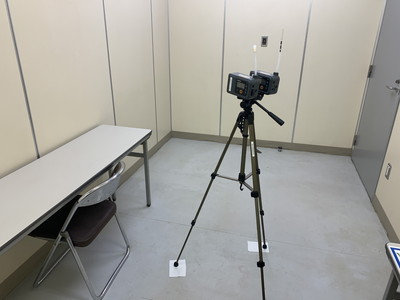
400.png)
.jpg)
Applications
When You Need to Measure Chemical Substances That Cause Sick House Syndrome
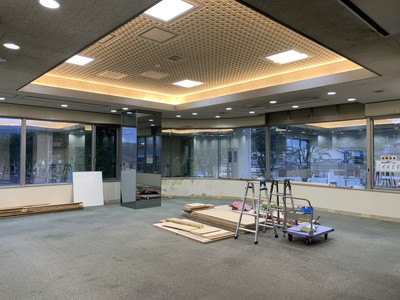
Sick House testing is typically required after new construction or renovation work, or in occupied buildings where the concentration of chemicals associated with Sick House Syndrome needs to be evaluated.
● We provide Sick House testing to meet project specifications, handover requirements, and measurements based on the School Environmental Health Standards, including Sick School testing, periodic inspections, and temporary inspections.
* Even if you are unsure about the project specifications or have not yet determined the testing requirements (such as target chemicals, number of sampling locations, or measurement methods), we can assist with planning the testing specifications and recommending the most suitable measurement program.

.png)
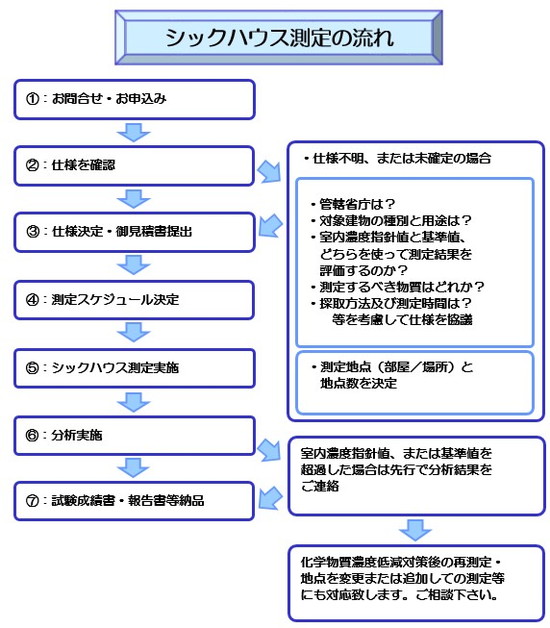
Workflow (After Your Request)
When conducting Sick House (Sick School) testing, it is necessary to determine the appropriate testing specifications by considering various factors, such as the responsible government authority, the type and intended use of the building, the substances that should be measured, and the most suitable sampling method.
Once the testing specifications have been finalized, we coordinate the measurement schedule and carry out the testing. The results can be provided, as required, in the form of test certificates, sampling location maps, site photographs, and comprehensive measurement reports.
- Step 1
- Inquiry & Application → Review of Testing Specifications
● We review project specifications and related documents to confirm the target substances, number of sampling locations, measurement methods, and other testing requirements.
● If there are no specifications for Sick House testing, if the available information is insufficient, or if there are inconsistencies among the project specifications and related documents, we will determine the appropriate testing specifications by considering factors such as the owner's requirements, local government policies, the building type, and the responsible government authority.
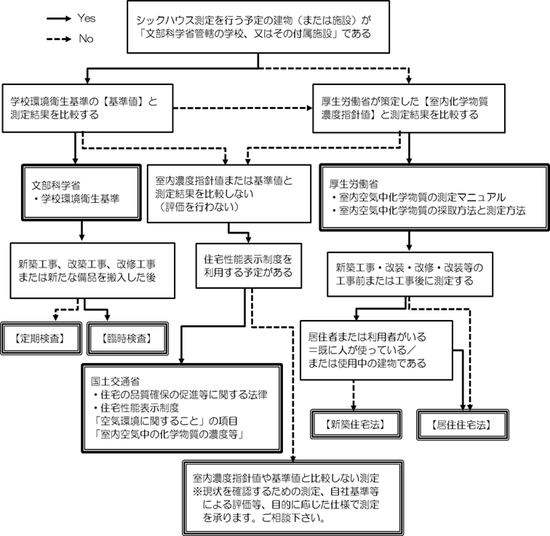
- Step 2
- Specification 1: Select the Target Compounds
● Indoor Air Guideline Values have been established for 13 substances, and a Tentative Target Value has been established for Total Volatile Organic Compounds (TVOC).
● The School Environmental Health Standards specify standard values for six substances (as of April 2021).
コメント追記.jpg)
- Step 3
- Specification 2: Determine the Measurement and Sampling Methods
[Measurement Methods]
● Newly Constructed Building Method
This method estimates the maximum indoor concentration of chemical substances. The room is first ventilated, then sealed, and measurements are taken after at least five hours.
● Occupied Building Method
This method measures chemical concentrations under normal occupancy and usage conditions. Measurements are taken while occupants continue their usual activities.
[Sampling Methods]
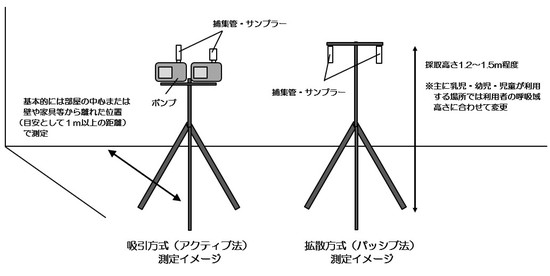
● Active Sampling Method: Designated by the Ministry of Health, Labour and Welfare as the standard sampling method. It can measure all 14 target substances for sick house investigations. Target compounds are collected using a sorbent tube and a sampling pump.
● Passive Sampling Method: One of the methods recognized as providing reliability equivalent to or greater than the active method. A sampling device is placed in the room for a specified period to collect the target compounds. Advantages include simple operation, reduced risk of errors or equipment trouble, and silent operation without the use of noisy instruments.
*For the passive method only, we can also provide sampling equipment for customers to perform the sampling themselves. This option is recommended when you wish to reduce costs, when construction schedules make it difficult to determine the measurement date in advance, or when a large number of sampling locations make the active method impractical. Please feel free to contact us for details.
● Other methods: Container Sampling / Detector Tube Method / Simplified Measurement Method, etc.
The required measurement period and schedule vary depending on the combination of target substances, measurement method, sampling method, and sampling duration.
550.jpg)
- Step 4
- Schedule the Measurement and Conduct the Survey
● The measurement date is scheduled in consideration of construction completion, handover, final inspections, and other project milestones. Measurements are then carried out according to the predetermined specifications.
*Whenever possible, measurements are scheduled immediately after construction is completed and avoid periods when work that may affect indoor air quality is being conducted nearby or around outdoor air intake locations.
*If conditions expected to significantly increase indoor chemical concentrations are identified beforehand—such as the use of paints or adhesives immediately before measurement, or large-scale painting work planned around the building on the measurement day—we may recommend postponing the measurement.
- Step 5
- Reporting and Delivery of Measurement Results
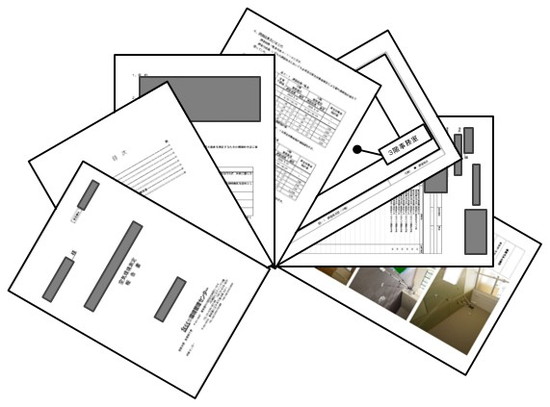
● Measurement results are provided in the form of a test report, sampling location map, site photographs, and a measurement results report, as required.
*If any measured concentration exceeds the Indoor Air Guideline Value or the applicable standard value, we will promptly notify you of the analytical results before delivering the final report.
Features
We also accommodate non-standard measurement requirements.
We are happy to discuss requests such as changing the measurement duration to suit the construction schedule, measuring substances without established indoor guideline or standard values, or using different sampling methods at different locations.
If measured concentrations exceed the Indoor Air Guideline Values or applicable standards, we also provide consultation on follow-up measurements after corrective actions have been implemented.
● We can also perform re-measurements at locations exceeding the guideline or standard values when project handover conditions require confirmation that concentrations are below the specified limits before acceptance.
*A separate quotation will be provided depending on the measurement requirements.
Case Examples
● In addition to sick house measurements, we also support construction projects requiring environmental measurements such as noise and odor monitoring. Please feel free to contact us.
● We also conduct sick house measurements before and after renovation or remodeling projects to evaluate changes in indoor chemical concentrations resulting from the work.
● Screening surveys using portable monitors or detector tubes can be performed to identify rooms with potentially high chemical concentrations before conducting detailed sick house measurements.
