
Overview
Endocrine disrupting chemicals (EDCs), also known as environmental hormones, are substances that interfere with the endocrine system and may cause adverse biological effects. They have been recognized as a global environmental issue since the 1960s, prompting extensive research and monitoring. In Japan, the Ministry of the Environment launched the "Strategic Programs on Environmental Endocrine Disruptors '98 (SPEED '98)" in 1998 to conduct environmental surveys and risk assessments. These activities are currently continued under the "EXTEND2016" program.
Our company has been involved in analytical method development and environmental monitoring since the launch of SPEED '98.
Analytes
Alkylphenols (Nonylphenol, 4-tert-Octylphenol, 4-tert-Butylphenol, 4-tert-Heptylphenol), Bisphenol A, Phthalate esters, 2,4-Dichlorophenol, Benzophenone, Tributyltin, 17β-Estradiol, and others.
Applications
Assessment of endocrine disrupting chemicals in environmental water and sediment
Long-term environmental monitoring of endocrine disrupting chemicals in natural ecosystems
Workflow (After Your Request)
- Step 1
- Survey Planning
We discuss your objectives and develop a comprehensive plan covering sampling through final reporting.
- Step 2
- Sampling
Samples are collected in dedicated containers according to the characteristics of the target analytes.
In some cases, we can provide the appropriate sampling containers and have customers collect the samples themselves.
- Step 3
- Analysis
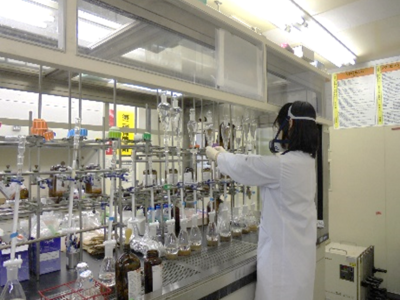
Samples are pretreated according to the target analytes and analyzed using advanced instrumental techniques.
Examples of sample preparation: Solid-phase extraction (SPE), solvent extraction, derivatization, etc.
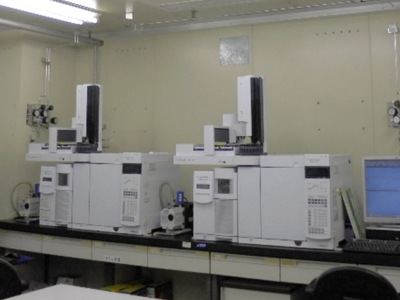
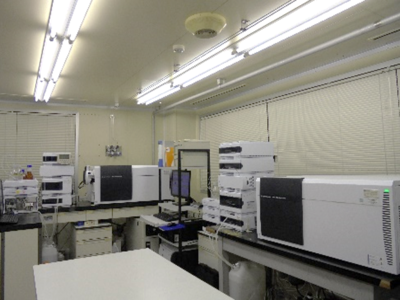
Examples of instrumental analysis: Liquid Chromatography–Tandem Mass Spectrometry (LC/MS/MS)
Gas Chromatography–Mass Spectrometry (GC/MS)
*Analyses are conducted in accordance with established methods, including the Provisional Manual for Surveys of Exogenous Endocrine Disrupting Chemicals, Standard Methods for Sewage Testing, and the Manual for Monitoring Priority Survey Items.
Features
Trace-Level Analysis for Ultra-Low Concentration Requirements
Many endocrine disrupting chemicals, such as plasticizers (e.g., phthalate esters), are commonly found in everyday environments. To accurately analyze these substances at extremely low concentrations, we perform analyses in cleanroom-controlled laboratories with rigorous contamination control procedures.
Case Studies & Experience
● Ministry of the Environment, FY2008 Report on the Environmental Survey of Chemical Substances
