
Overview
Are you experiencing any of the following issues?
● Foreign materials found on products (food, materials, etc.)
● Product discoloration or damage (including comparison with unused products to help identify the cause)
● Analysis of deposits causing pipe blockages
● Analysis of unknown foreign materials found in residential environments
We offer foreign material analysis to identify contaminants and provide detailed information about their composition.
In addition to analysis using the instruments listed below, we leverage the EM Network to recommend the most appropriate analytical methods for your needs.
We also propose testing and analytical services to help determine contamination sources and prevent recurrence. Backed by extensive experience in environmental investigations and analysis, we provide effective solutions based on our technical expertise.
-
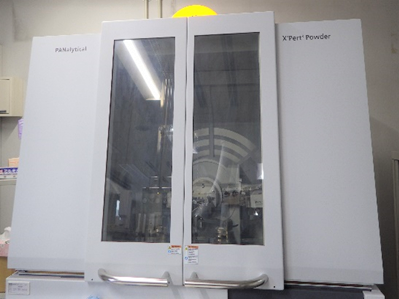
XRD
-
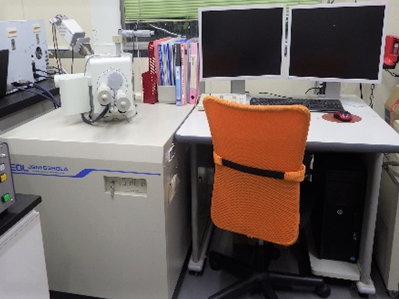
SEM-EDS
-
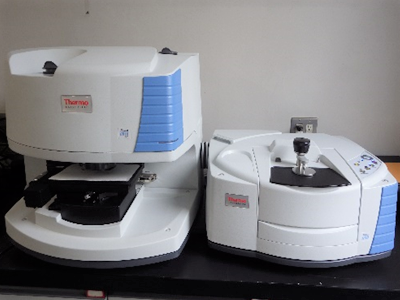
Micro FT-IR
Workflow (After Your Request)
- Step 1
- Consultation
First, please contact our staff. We will discuss the circumstances surrounding the foreign material and the issues you are experiencing.
- Step 2
- Proposal of Analytical Methods
Based on the information provided, we propose the most effective analytical methods for identifying the foreign material.
We will also recommend appropriate sampling procedures and sample submission methods.
If desired, our staff can visit your site to collect samples.
- Step 3
- Analysis and Reporting
We will report the analytical results of the foreign material. The same technical specialist will support you throughout the entire process, from analysis to reporting.
- Step 4
- Proposal of Additional Testing
Upon request, we can propose additional analyses and contract testing to investigate the root cause and help prevent recurrence.
- Step 5
- Additional Testing and Final Report
We compile all test results and provide a comprehensive final test report.
Main Instruments and Case Studies (Stereo Microscope)
-
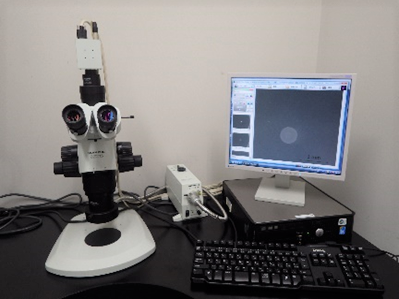
Features
● Enables observation of sample morphology
● Allows confirmation of color and shape to estimate the foreign material and select the most suitable analytical location and method -
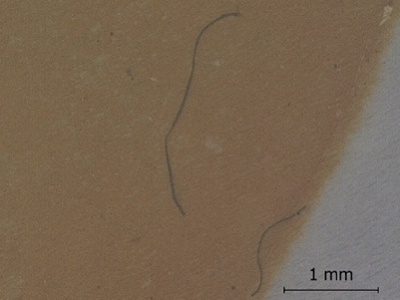
Example: Stereo microscope image of fibers
Main Instruments and Case Studies (XRD)
-
Features
● Capable of analyzing crystalline components in solid samples -
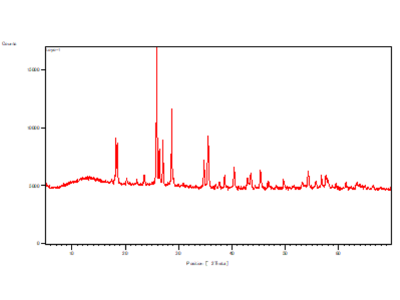
Example: XRD analysis of ash
Main Instruments and Case Studies (SEM-EDS)
-
Features
● Enables observation of sample morphology and elemental analysis of selected areas
● Suitable for pinpoint analysis of extremely small samples (such as foreign particles) -
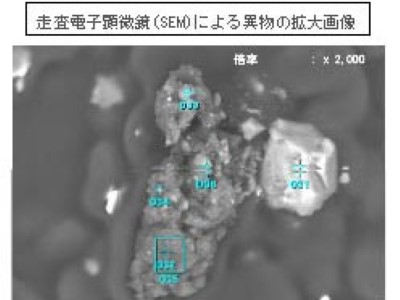
Example: Observation and elemental analysis of black deposits on a product
-
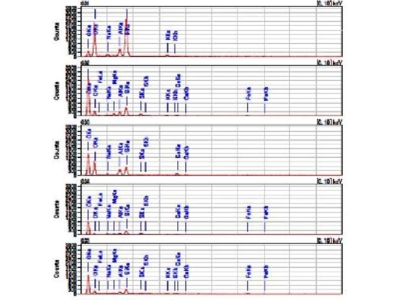
Example: Spectrum
● SEM-EDS analysis identified not only fine particles believed to be mineral-derived but also particles containing carbon and sulfur.
● Because diesel exhaust particulates are known to contain significant sulfur, these particles were considered likely to have originated from the combustion of diesel fuel or heavy oil.
Main Instruments and Case Studies (Micro FT-IR)
-
Features
● Capable of analyzing organic compounds such as rubber, plastics, coatings, and oils
● Can investigate molecular structural changes caused by discoloration or degradation
● Enables analysis of microscopic areas as small as several tens of micrometers -
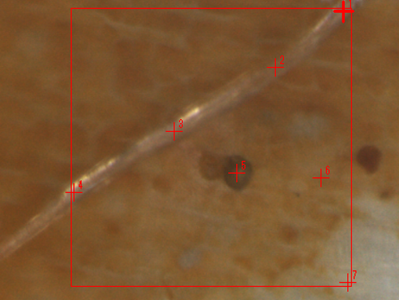
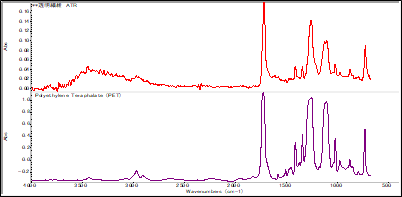
Example: Fiber analysis
Micro FT-IR analysis indicated that the fiber was composed of polyester. -
Main Instruments and Case Studies (Contract Testing)
Feature: After conducting foreign material analysis, we propose the most suitable testing and analytical methods.
Examples:
● Composition analysis of resin
[Additional Contract Testing] ⇒ Resin solubility testing at different water temperatures and composition analysis after heating
● Composition analysis and physical property testing of ash
[Additional Contract Testing] ⇒ Ash leaching characteristics test (serial batch method)
● Composition analysis of buried waste
[Additional Contract Testing] ⇒ Hydrogen sulfide generation potential test for waste containing gypsum board
● Composition analysis of ash (X-ray fluorescence analysis and wet chemical analysis)
[Additional Contract Testing] ⇒ Calculation of correction factors for on-site management using X-ray fluorescence analysis
