
Overview
●Waste Characterization and Loss on Ignition Analysis of Incineration Ash
According to Kansei No. 95 (November 4, 1977, "Guidelines for the Operation of Municipal Waste Disposal Services"), waste characterization analysis should be conducted at least four times a year, and loss on ignition analysis of incineration ash should be conducted at least once a month.
●Waste Composition Analysis
National policies such as the Containers and Packaging Recycling Act and the Act on Promotion of Food Loss and Waste Reduction require understanding waste generation status and obtaining basic data to promote waste reduction and resource recycling.
●Analysis of Waste Residues, Sludge, Waste Oil, and Other Wastes
Under the Waste Management and Public Cleansing Act, testing for hazardous substance leaching and content is required before disposing of industrial waste, specially controlled municipal waste, and specially controlled industrial waste.
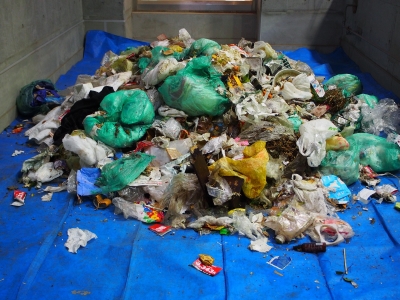
●Waste Characterization Analysis: Bulk density, three-component analysis (moisture, ash, combustible matter), calorific value analysis, composition analysis, elemental analysis (C, H, N, O, etc.)
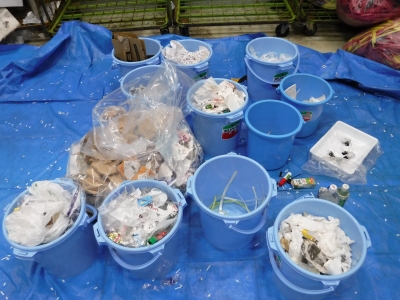
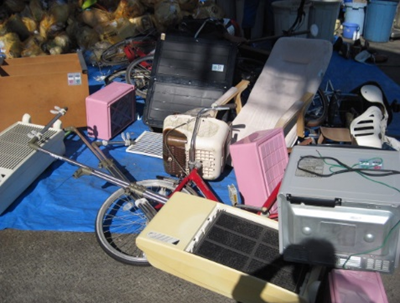
●Waste Composition Analysis: Combustible waste, non-combustible waste, bulky waste, commercial waste
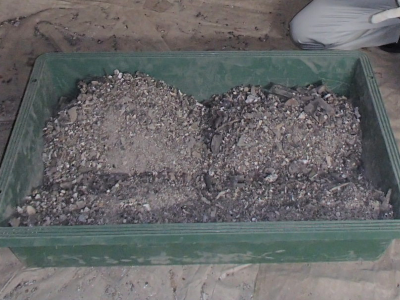
●Incineration Ash Analysis: Loss on ignition analysis
●Waste Analysis: Leaching and content analysis of hazardous substances
Related Regulations
●Ministerial Ordinance Establishing Criteria for Waste Containing Metals, etc. (Prime Minister's Office Ordinance No. 5, February 17, 1973)
●Testing Methods for Metals, etc. Contained in Industrial Waste (Environmental Agency Notification No. 13, February 17, 1973)
●Testing Methods for Standards Related to Specially Controlled Municipal Waste and Specially Controlled Industrial Waste (Ministry of Health and Welfare Notification No. 192, July 3, 1992)
Applications
Periodic analysis of waste brought into and discharged from waste treatment facilities (municipal incineration plants and private facilities)
Provision of fundamental data for waste reduction initiatives
Assessment of food waste generation
Assessment of recyclable materials contained in non-combustible waste
Testing of regulatory parameters for industrial waste disposal
Workflow (After Your Request)
We provide a one-stop service from planning through investigation, analysis, reporting, and improvement proposals. In Step 1, the evaluation method is determined with the customer. Step 2 involves investigation and analysis, followed by reporting of the results in Step 3.
- Step 1
- Design of Evaluation Method and Survey Plan
Based on your evaluation objectives and background, we will propose the most appropriate survey method, including frequency, timing, duration, and analytical parameters.

- Step 2
- Sampling & Analysis
Our staff visit the site to conduct surveys and collect samples.
Examples:
●Waste characterization: In accordance with Kansei No. 95, waste is collected from treatment facilities and analyzed in our laboratory.
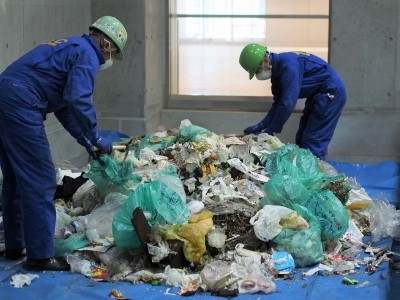
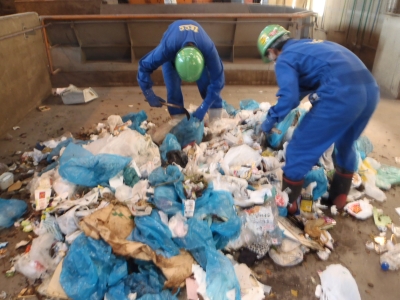
●Waste composition analysis: Waste bags are opened on-site, and the contents are sorted by specified categories to determine composition ratios.
- Step 3
- Reporting
Measurement and analytical results are provided in the form of test certificates or detailed reports.
The data can be used as fundamental information for understanding current conditions and developing waste reduction measures.
Case Studies & Experience
●Monitoring services for waste treatment facilities (municipal incineration plants and private facilities)
●Municipal waste composition surveys for commercial and household waste (various local governments)
