
Overview
Asbestos is a naturally occurring fibrous mineral that has long been used as an industrial material. It can cause serious health problems after a long latency period.
Although the manufacture and use of new asbestos products are prohibited, asbestos-containing materials are still present in existing buildings. Therefore, a preliminary asbestos investigation is required before demolition or renovation work.
Our experienced staff are available to provide consultation and analysis services for a wide variety of asbestos-related cases.
Applications
Our services are mainly used in the following two situations.
When Planning the Demolition or Renovation of Buildings
Japanese law requires confirmation of whether asbestos-containing building materials are present before demolition or renovation work begins. A preliminary investigation must therefore be completed before construction starts.
When Asbestos-Containing Building Materials Are Suspected in Existing Buildings
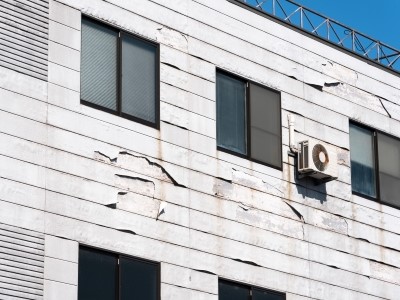
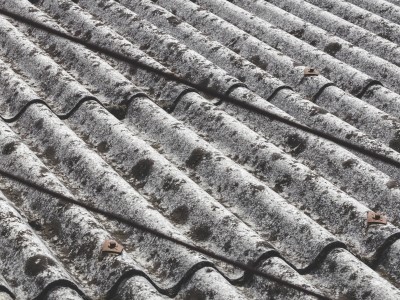
Older buildings may contain asbestos-containing building materials. Health hazards caused by airborne asbestos released from building materials have been reported, making appropriate management and maintenance essential.
We also provide consultation on a wide variety of other asbestos investigation and analysis needs.
Preliminary Investigation Process (After Your Request)
Before demolishing or renovating buildings containing asbestos-containing materials, Japanese law (the Air Pollution Control Act and the Ordinance on Prevention of Health Impairment Due to Asbestos) requires a preliminary investigation to confirm whether asbestos-containing building materials are present.
The investigation follows the sequence: Document Review → Visual Inspection → Sample Collection → Laboratory Analysis.
The investigation must be carried out by qualified personnel.
- Step 1
- Document Review
We review design drawings and related documents and conduct interviews to identify asbestos-containing building materials and determine which areas require investigation.
- Step 2
- Visual Inspection and Sample Collection
We verify consistency with the document review and inspect areas that cannot be evaluated through documentation alone. If the presence of asbestos cannot be confirmed, samples are collected for laboratory analysis.
All investigations and sample collection are performed by experienced certified specialists.
- Step 3
- Building Material Analysis
Collected samples are analyzed using the polarized light microscopy method (JIS A 1481-1), and preliminary results are typically available within five business days. We also support JIS A 1481-2 and JIS A 1481-3.
Analyses are conducted by experienced technical specialists.
Features
Our experienced staff propose the most appropriate investigation based on your specific requirements.
On-site investigations are supervised and conducted by certified Building Asbestos Surveyors.
Laboratory analyses are performed by JAWE A- and B-Rank certified asbestos analysts.
We also provide surveys for the routine management of buildings where asbestos-containing materials have already been identified.
We accommodate a wide range of customer needs, including on-site analysis using our Mobile Laboratory and investigations beyond building materials.
Comprehensive Support for Asbestos Management
Our experienced staff provide comprehensive support for your asbestos management needs. In addition to investigations and laboratory analyses, we also offer consulting services for asbestos removal projects, coordination with government authorities, and information disclosure. Please feel free to contact us.
We also provide on-site analysis using our Mobile Laboratory, as well as asbestos investigations of soil, waste materials, and other samples, tailored to your specific requirements.
Technical Case Study (Mobile Laboratory)
Following major disasters such as the Great Hanshin-Awaji Earthquake, the Niigata Chuetsu Earthquake, and the Great East Japan Earthquake, the proper handling of asbestos-containing building materials from damaged structures has become a significant issue. In the Great East Japan Earthquake, appropriate sorting and on-site management of asbestos-containing materials mixed with disaster debris were also required.
Approximately one month after the Great East Japan Earthquake, at the request of the Ministry of the Environment, we conducted on-site asbestos analysis using our Mobile Laboratory in the affected areas to help prevent residents and recovery workers from being exposed to asbestos-containing dust.
In disaster-affected areas, rapid on-site analysis is essential not only for the proper disposal of asbestos-containing building materials from collapsed structures but also for preventing asbestos exposure among residents and recovery workers.
As reconstruction progresses, support is needed from every possible perspective. By deploying our Mobile Laboratory directly to affected sites, we aim to contribute to the proper management of asbestos-containing materials and help protect the health of residents and reconstruction workers.
We also contribute to the proper handling of asbestos-containing materials during urban redevelopment projects and building demolition or renovation by providing rapid on-site asbestos analysis.
.png)
